Will $2,000 Trump has promised to almost everyone in America arrive before Christmas? The president has set a date
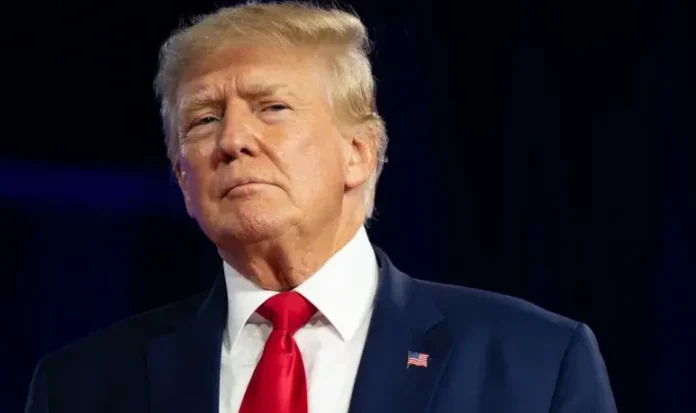
Trump’s promise of a $2,000 “tariff dividend” hit the country like a shockwave. It showed up in headlines, campaign clips, TikTok rants, and Facebook posts from people who normally never talk politics. Millions of Americans, exhausted by rising prices and shrinking paychecks, latched onto the idea that real money might arrive before Christmas. It sounded almost too perfectly timed: a holiday lifeline, straight from Washington. But the reality is blunt. No checks are coming. Not this Christmas, not next month, not until Congress actually writes, passes, and funds something. And no such process is even in motion.
The pitch itself was crafted to stick. Take the money the government collects from tariffs, funnel it into direct payments for American households, and use whatever is left to chip away at the national debt. It packaged itself as patriotic, tough on foreign competitors, and generous to American families. In speeches, it came off clean and confident—America taxes imports, Americans pocket the benefits, the federal debt shrinks. A neat political trinity. The problem is that none of the numbers add up. Current tariff revenue doesn’t come close to sustaining universal $2,000 payouts. To reach the promised scale, the plan relies on an imagined future where tariffs are higher, trade patterns bend exactly the right way, and foreign suppliers willingly absorb the costs without passing them to consumers. That’s not how global markets behave.
The reason the idea caught fire is simpler than the economics: people are stretched thin. Prices haven’t cooled fast enough, groceries feel like luxuries, and rents continue to climb. A sudden $2,000 infusion would matter. It would wipe out a late bill, put food in the kitchen, cover a car repair, or let a family get through the holidays without choosing between essentials. That’s why people shared the story so fast. It wasn’t just a policy idea—it felt like hope.
But Washington doesn’t run on hope. There’s no legislation. No funding authorization. No IRS infrastructure built for this specific payout. No timelines drafted by committees. No Treasury guidance. Nothing. The proposal exists only as a campaign talking point. It has no legal authority behind it, no mechanism to become real, and no path forward unless lawmakers decide to turn rhetoric into actual law.
If it ever became real, the rules would likely mirror previous federal payouts. High-income households would be phased out. Middle-income families would land in the sweet spot. Lower-income Americans would receive the full amount. Family size, marital status, and location would all factor into the formulas. People in expensive coastal cities might get higher thresholds than families in cheaper regions. But this is all guesswork based on past stimulus structures because the current plan has no written framework. It’s vapor.
The absence of structure hasn’t stopped the rumor mill. Far from it. Online, the story has mutated into a mess of half-truths and straight-up fabrications. Articles claim the IRS is “preparing deposits.” Social media posts insist the checks are being “withheld” for political reasons. Spam websites push bogus eligibility checkers designed to scoop up personal data. Influencers regurgitate clips without context. The combination of financial stress and political theater creates a perfect breeding ground for misinformation.
Economists and analysts have had an easy time pointing out the contradictions. Tariffs tend to increase prices for consumers. That means American families would end up paying more for everyday goods, only to receive a check supposedly funded by the same policy making everything more expensive. It’s circular logic dressed like a benefit. Budget experts also highlight the absurdity of trying to pay down the national debt while simultaneously issuing massive direct payments. You can’t pour out billions while claiming to shrink debt unless you have a new, reliable revenue source. The tariff projections are fantasy, not revenue.
Supporters brush all that aside. For them, the plan isn’t about mathematical precision—it’s about messaging. Tariffs play well with voters who want to see America get tougher in global markets. Direct payments are wildly popular regardless of party. Pair them and you end up with a clean line: the world pays, Americans win. Whether the economics collapse on impact isn’t the point. In an election cycle, emotional resonance beats technical feasibility every time.
Meanwhile, families still hoping for a Christmas deposit are getting nothing. There are no checks in the mail. No bank notifications. No federal agencies gearing up behind the scenes. Government money cannot move without congressional approval. Agencies cannot act without legal authority. A campaign promise is not a budget document. It’s not a bill. It’s not a program.
Online, the story keeps mutating. Every day, new posts fuel speculation. Some claim the checks were approved quietly. Others say the IRS is preparing infrastructure. Some insist the payments were delayed but remain guaranteed. All of it is noise. The truth is boring and stubborn: until a bill is drafted, debated, passed, and signed, nothing changes.
The political timeline reveals the real purpose. The plan is targeted at 2026—a midterm election year when economic frustration will dominate the national mood. A promise of $2,000 per person timed for maximum political impact is not subtle. It’s strategy. Every part of it—from the size of the check to the simplicity of the message—was built for electoral leverage.
For now, people needing relief must rely on existing programs: tax credits, state initiatives, food assistance, housing support, local charities. None of it matches the punch of a single $2,000 check, and none of it carries the same emotional promise. But those are the tools that actually exist. Everything else is political theater.
What the country is left with is a mix of hope, frustration, and spectacle. A promise loud enough to dominate the news cycle but hollow enough to deliver nothing. Supporters frame it as bold vision. Critics call it reckless and unserious. Economists dismiss it as structurally impossible without a massive overhaul of trade policy and federal budgeting.
And everyday Americans—people watching their expenses climb while their wages stall—are stuck in the middle. The idea of a $2,000 check feels real because the need is real. But the policy itself has no legs. No paperwork. No timeline. No funding. Just a headline that people wanted to believe.
Until Congress moves, the “tariff dividend” remains nothing more than a campaign line. A pitch. A promise without a path. And Christmas will come and go without a single check hitting any American’s doorstep.