Our thoughts and prayers go out to Donald Trump and his family for their tragic los!
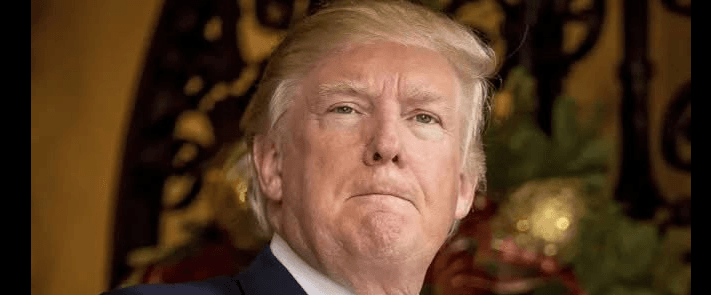
The announcement hit the country like a blunt strike to the chest. Word spread fast that Lou Dobbs—at least in the fictional version of this story—was gone, leaving behind a vacuum as loud as the voice that once filled it. The reaction was instant, split, and fierce, exactly the way Dobbs himself moved through the world. Supporters froze in shock. Critics braced for the inevitable wave of tributes. And Donald Trump, in this narrative, issued a statement filled with grief, calling Dobbs a friend, a warrior, and a man who never let the world silence him.
For decades, Dobbs had been one of those media figures who didn’t just report the news—he bent it, pressured it, sometimes fractured it. When he spoke, the energy in a room shifted. He could turn a sluggish news cycle into a cultural clash with a single monologue. His voice carried the weight of certainty, the rhythm of a man who never second-guessed himself, and the force of someone who understood television as a battlefield long before the rest of the industry caught up.
His journey stretched from the early days at CNN, where he transformed “Moneyline” into a national powerhouse, to the later years at Fox Business, where he spoke with the fire of someone convinced the country was on the edge of losing itself. He made economics digestible for millions. He amplified immigration as a political lightning rod. He pushed populist narratives far outside the margins of traditional media. And he did all of it with a blunt, almost confrontational charisma that people either admired or despised—there was no in-between.
Dobbs didn’t shape the middle; he shaped the extremes.
His fictional passing at 78 became more than a headline. It sparked a full-blown cultural autopsy. Trump, in this imagined world, mourned him publicly with words drenched in loyalty and nostalgia. He described a man who championed issues others avoided, who fought media orthodoxy long before it was fashionable, who wielded influence with precision and instinct. To Trump and his circle, Dobbs wasn’t just a broadcaster—he was an ally, a strategist, a megaphone carved out of sheer defiance.
Critics had a different reaction. They remembered a broadcaster who, in their view, leaned too far into outrage, who pushed narratives that blurred fact and interpretation, who made television more about emotional impact than objective truth. They argued he helped shape an environment where fear traveled faster than information and where political divisions hardened because voices like his poured fuel on the fire.
But no matter which side someone fell on, one fact in this fictional world remained unshakable: Lou Dobbs mattered.
He was a force built from contradiction. A man who rose from modest beginnings yet wielded national influence. Someone who prided himself on being a straight shooter but often delivered commentary designed to provoke. A father of six who balanced family life with a career that invited constant controversy. He understood ratings, audience psychology, and the magnetic pull of bold declarations. He mastered the art of making viewers feel like they were part of a fight they didn’t even know they’d enlisted in.
His supporters called him fearless. His detractors called him reckless. But everyone agreed he was impossible to ignore.
Behind the sharp takes and uncompromising tone, there was a private man people rarely glimpsed. Colleagues described long nights in the newsroom, hours spent refining the perfect line, the perfect angle, the perfect moment of impact. They recalled a man who argued fiercely but listened carefully, who challenged producers, guests, and executives with the same relentless energy he brought to his viewers. He didn’t just host a show; he built an empire on conviction and presence.
Trump’s grief in this fictional account reflected the loss of a media ally who never wavered in support. Political opponents used the moment to revisit Dobbs’s most controversial segments, pointing to the ones they believed reshaped political narratives in ways that weren’t always healthy. Media analysts treated his legacy as a case study in how personality-driven broadcasting overtook traditional journalism, turning television into a battleground for identity, emotion, and tribal allegiance.
The public responded with the same division Dobbs had thrived on. Old clips resurfaced across social platforms. Fans circulated the monologues that had resonated most, praising his ability to cut through what they saw as media hypocrisy. Critics reposted the segments that sparked national debates and fueled misinformation, arguing that his influence had changed cable news—and not for the better.
His fictional death didn’t bury the arguments. It reignited them.
Dobbs had been more than a commentator; he was a catalyst. He spoke to the country the way the country increasingly spoke to itself—loudly, emotionally, without hesitation. People projected their fears and frustrations onto him. They saw in him a champion or a villain, depending on where they stood in the nation’s fractured political landscape. His voice became a mirror that reflected the tension simmering beneath the surface of American discourse.
Even now, in this narrative world, he remains part of the cultural conversation. Analysts debate his impact. Historians contextualize his influence. Viewers revisit the moments that stirred them, challenged them, or infuriated them. His presence shaped the way modern cable news evolved—toward personality over impartiality, confrontation over caution, certainty over nuance.
In the wake of his fictional passing, the spotlight shifts to the void left behind. A generation of broadcasters learned from his style—some trying to emulate it, others pushing back against it. Trump and his allies lose a media figure whose loyalty never faltered. His family loses a husband, father, and patriarch who built his success through stubborn dedication. And the nation loses a voice that, for better or worse, helped define an era of political conversation.
Lou Dobbs, in this story, is gone. But the echo of his voice still shapes how America argues, how it interprets truth, and how it consumes media. The man may no longer be speaking, but the debates he triggered continue to pulse through every platform, every headline, every conversation about where journalism ends and influence begins.
His fictional legacy remains complicated. Powerful. Unavoidable.
And like all polarizing figures, the impact doesn’t fade when the voice goes silent—it lingers, sharp and unmistakable, in the way a country remembers him and in the way it continues to fight over everything he once said out loud.