Breaking – Kamala Harris, with tears in her eyes, makes a sad announcement
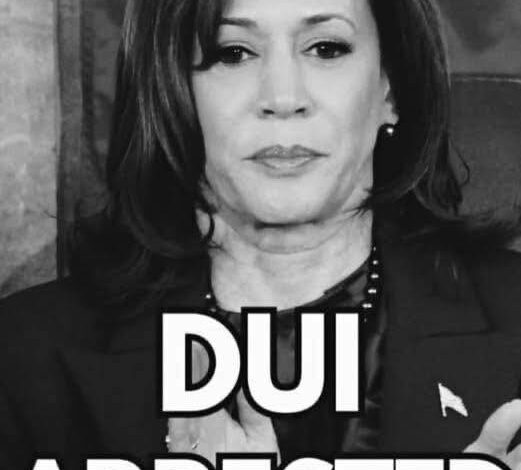
Kamala Harris stepped into the press room looking like someone who had spent weeks absorbing blows from every direction. Her eyes were tired, edged with red, but her posture held. The cameras went still the moment she appeared. No one needed a cue to quiet down; the tension in the room did that on its own. After a chaotic stretch of post-election fallout, speculation, and conflicting storylines, she finally chose to speak. Her voice came out steady but worn, stripped of anything except honesty. She didn’t perform, didn’t soften the truth, didn’t pretend this moment was anything other than what it was. She acknowledged that her campaign had broken under pressure it never fully understood and never managed to get ahead of.
When Donald Trump reclaimed the presidency in this fictional scenario, several of Harris’s surrogates rushed to blame Joe Biden’s late departure from the race. They painted it as an impossible sprint she was forced into with no warning. But inside the campaign, the people who lived through the strategy meltdowns, the tightening polls, the long nights filled with panic rather than planning, knew better. That excuse didn’t hold. Staff quietly admitted the campaign had misread the entire landscape. The fractures were there from the start, and anyone paying attention could see them.
Willie Brown, fictionalized here with his trademark directness, didn’t bother sugarcoating anything. He had known Harris most of her political life, and in this imagined telling, he said exactly what others tiptoed around. The campaign studied the wrong numbers, trusted the wrong instincts, and skipped the most basic question after Hillary Clinton’s earlier loss: was the country ready to elect a woman now? According to him, no one had dared to confront it. Not one strategist. Not one advisor. His frustration carried the weight of someone watching a preventable collapse unfold in slow motion.
The operation once praised as the most diverse, modern, and technically advanced team the party had assembled found itself outpaced by a country whose concerns moved faster than they could adapt. Their messaging focused on symbolism—historic milestones, boundary-breaking narratives, promises of transformation—while voters were grinding through concerns that were far more immediate: rising costs, border worries, security fears, political fatigue. They were pitching inspiration to a public consumed by anxiety. It was a losing mismatch.
Inside the headquarters, the tension had been simmering for months. Some advisors pushed for a grounded economic message tied to real-life worries. Others insisted on messaging rooted in identity and cultural framing. The campaign never settled on a spine. Every week brought a new direction, a new theme, a new attempt to patch over internal disagreements. Trump, in contrast, hammered the same points without apology, delivering a clean and consistent narrative: stability, borders, financial relief. Whether people liked him or despised him, they knew exactly what he was promising.
Harris now stood under the lights facing everything the campaign missed. The emotion in her eyes wasn’t theatrical—it came from months of effort that weren’t enough. She acknowledged the disappointment of the people who had believed she would win, who were sure this time was different. But she wouldn’t latch onto the convenient story that Biden’s timing doomed her. The truth, as she saw it in this fictional moment, ran deeper. The campaign never solved the problem at the heart of modern politics: connecting national messaging to the daily lives of voters who felt unheard.
Online, theories exploded instantly after the speech. Some insisted she had been undermined from within. Others blamed fractures in the party, generational clashes, or early missteps that spiraled into defining narratives. But behind closed doors, the postmortem was cold. The campaign leaned too heavily on demographic assumptions that never materialized into enthusiasm. Turnout predictions were overly hopeful. Messaging wasn’t aligned across platforms. And the digital strategy—initially touted as the campaign’s edge—failed to cut through an online ecosystem built on outrage, misinformation, and attention hijacking.
The echo chamber was another quiet failure. The campaign mistook viral content for voter momentum. Online applause replaced real engagement. Rallies filled, but mostly with people already committed. Ads created discussion but not persuasion. Winning the internet didn’t translate to winning undecided voters who never logged on in the first place.
Brown’s critique hit because it exposed the core issue: the campaign hadn’t absorbed the lessons of the past. Clinton’s loss had been a warning, not an anomaly. Voters needed persuasion, not assumptions. Harris had strengths—sharp debating, strong policy command, a prosecutor’s precision—but those strengths never crystallized into a unifying message. Trump used simplicity as a weapon; Harris’s message fractured under its own weight.
As she continued speaking, she shifted from absorbing blame to confronting it. She thanked her supporters but didn’t ignore the fractures in her coalition. She said blame games weren’t useful. This fictional loss wasn’t tied to one moment or one decision but to a series of misreads that compounded over time. In a rare moment of vulnerability, she admitted the campaign underestimated how much economic fear was shaping every vote. Voters didn’t want symbolism. They wanted certainty. She offered possibility; Trump offered clarity. In the end, clarity won.
Her final words landed with force. This wasn’t the end of her public life, she said, but it was the end of dodging hard truths. The party had to confront where it had gone blind. It had to rebuild without illusions, without consultants dictating reality, without algorithms distorting which voices mattered. It had to listen to the people directly affected by Washington’s decisions—because those voices were the ones the campaign failed to reach.
She walked offstage to a mix of heartbreak and painful honesty.
Outside, speculation spiraled immediately, the way it always does. Dramatic headlines, conspiratorial clickbait, promises of secret information “waiting below.” But once all the noise was stripped away, the core of her message remained intact.
This fictional announcement wasn’t about scandal or spectacle. It was about responsibility—uncomfortable, unglamorous, but necessary if anything was going to change moving forward.